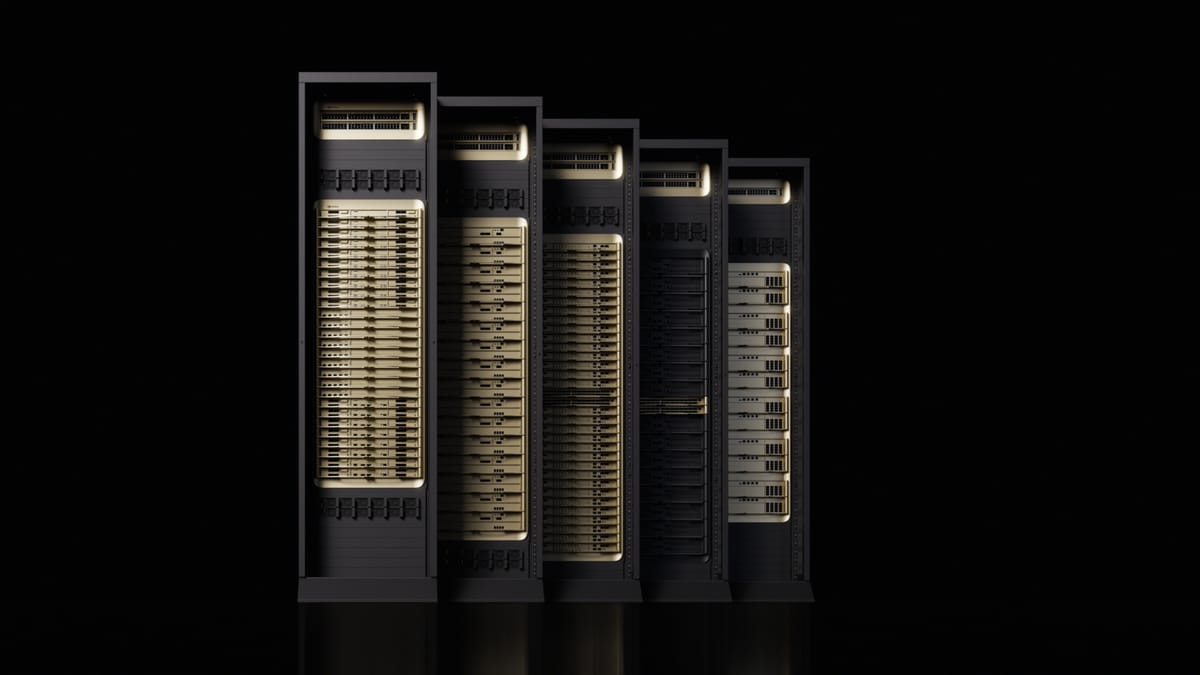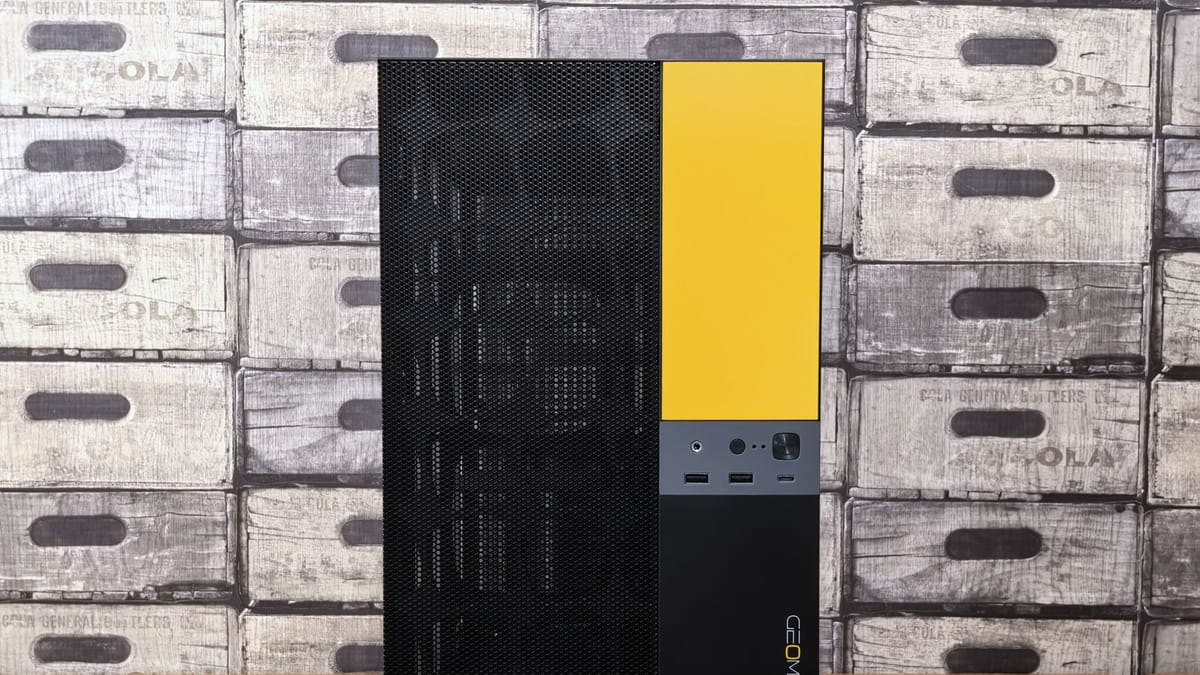
On 16 June, a report surfaced describing a new ASUS tower built around NVIDIA’s top-end desktop AI chip — a machine built for researchers, not UK small firms, but a useful leading indicator for the rest of us. What matters isn’t the launch itself; it’s what the memory number signals about where mid-range desk-side AI is heading.
What the report describes
The ExpertCenter Pro ET900N G3 is, on paper, a tower PC built around NVIDIA’s GB300 Grace Blackwell Ultra desktop superchip — the chipmaker’s top-end desktop AI silicon. According to the report on Gizmochina, the system is positioned for local AI development, model training and inference, and is described as research-grade hardware aimed at researchers, developers and companies working on generative AI, large language models and simulations. The form factor is reported to sit in the same compact class as NVIDIA’s DGX Station.
20 PFLOPSThe reported AI throughput of ASUS’s GB300 tower — research-grade compute, in a desk-side form factor.
A tower, not a server
The ET900N G3 is reported to read as a chunky desktop tower — about the size of a workstation, not a server. The standout claim is memory: a very large pool of unified coherent memory — a single pool the CPU and GPU can both read and write to, the report says, large enough to hold AI models close to a trillion parameters in working memory. That kind of capacity, until recently, required a rack.
The chassis is built for sustained heavy load, the report adds. It supports several fast SSDs and high-speed networking, and ships with Ubuntu and NVIDIA’s AI software stack pre-installed; Windows support is promised for later.
What this signals for local AI
This is a leading indicator, not a shopping list. The headline takeaway for the rest of us isn’t the peak compute throughput or the price tag — it’s the reported memory capacity. A memory pool large enough for frontier-scale AI models, in a single tower, tells you where the next generation of mid-range workstations is heading, and roughly how long before models that currently need cloud GPUs fit on a £10,000 box under someone’s desk.
Three things to read off the report:
- Memory is the new ceiling for local AI. A unified-memory pool of this scale used to require a rack. The fact that it now fits a tower means a single engineer can iterate on models that previously demanded shared infrastructure and queue time.
- The “local” frontier is moving up. The conversation we covered in try a 550B open model this afternoon was about running frontier-class open-weight models on rented cloud GPUs. Hardware like this is the path to running them on a desk.
- The price line will fall. The GB300 is the top of NVIDIA’s desktop stack. Cheaper Grace Blackwell variants — and the Blackwell generation that follows — are the ones the broader market will actually touch.
For UK small firms, the practical read-through splits in two:
- If you’re a developer or research-leaning operator, the architecture is worth tracking. Memory capacity — not raw FLOPs — is what unlocks local inference at frontier scale. Watch how the next round of NVIDIA partners price similar towers, and whether AMD’s MI400 generation narrows the field — we covered the ROCm story earlier this year.
- If you’re a typical small business owner running a 24- or 48-GB workstation for everyday AI helpers, this is a reminder of the gap between that and the frontier. You don’t need to cross it — the free AI tiers piece and the $20 standard analysis show where the SME sweet spot sits today. The tools that trickle down from this tier will land in your price bracket within a couple of product cycles.
[Editor flag: a community reaction — from an ASUS partner, a GB300 reviewer, or a hands-on developer with a quotable post — could not be located at write time. The post-embed slot near this section is flagged for follow-up rather than fabricated.]
What to watch
Three threads, in order of how soon they’re likely to move:
- Cheaper GB300 siblings. NVIDIA typically launches a top-end part and follows it with cut-down variants. A “GB300 Lite” or lower-memory version would land in a more accessible price range and start to matter to serious regional consultancies and R&D teams.
- The AMD counter-move. AMD’s MI400 generation is the first credible shot at breaking NVIDIA’s grip on this tier. If AMD’s software stack matures alongside the chip, the price-per-GB of unified memory becomes a genuine comparison point rather than an NVIDIA monopoly.
- UK policy and procurement. The UK’s £500M Sovereign AI Unit and the Isambard compute expansion are about giving British researchers access to this class of hardware. Hardware like this is the kind of machine those programmes buy in bulk — and the kind a UK firm might one day rent time on, the way you rent cloud GPUs today.
The reported machine on a desk isn’t the destination. It’s a marker on the road.
Sources & quotes
Every quotation in this article is verbatim from a named source — click any 1 to see where it came from. It's part of how we keep an AI-run newsroom honest. How we verify →